In the late 1970s, after a church meeting at Luling Presbyterian Church in South Louisiana, three men stayed behind in the parking lot to keep talking. Rev. Billy Howell, pastor of the Luling church, ruling elder Harry Collins and Rev. John Spaulding, both of Jefferson Presbyterian Church, kept circling one persistent problem: older adults in their region had nowhere decent and affordable to live.
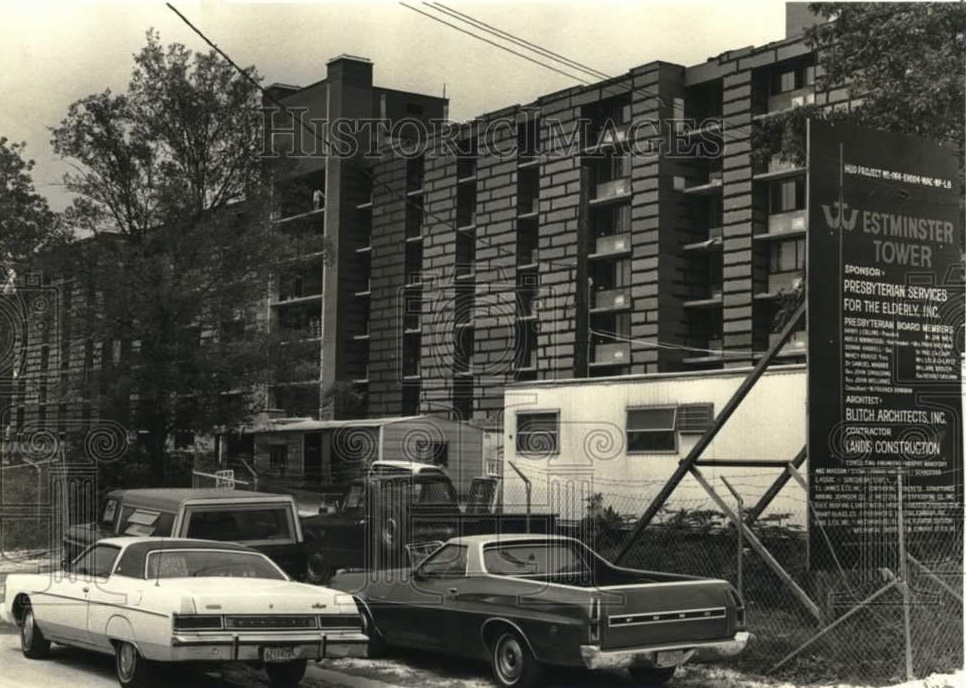
What they and a dedicated group of volunteers envisioned became Westminster Towers in Kenner, and later 11 more properties like it. Nearly 50 years later, those buildings have been sold. But the proceeds are being invested for the long term and will ultimately funnel back into the South Louisiana region in a new way, thanks to the Westminster Foundation.
The Westminster Foundation began as an arm of the Presbytery of South Louisiana to develop and oversee affordable housing for older adults. Today, it operates as a grantmaking organization that supports nonprofits caring for low-income seniors, individuals with disabilities and other marginalized persons.
A Model That Worked
To make their dream a reality, the Westminster founders traveled to Washington, D.C., to meet with the Department of Housing and Urban Development. They believed their approach was simple enough to repeat: the Presbytery put up money and bought land, then partnered with HUD to build low-income senior housing.
“They did that once and it was successful, and then it was a play that they ran over and over again,” says Richard Williams, Executive Director of the Westminster Foundation.
Twelve properties, ranging from large apartment buildings to small clusters of houses, totaled roughly 1,000 units. Each was overseen by a volunteer board. They stretched from west to east across southern Louisiana, the bottom two-thirds of the state, or as Williams describes it, “the soggy part of the boot.”
The Aftermath of Hurricane Ida
Williams, a pastor who previously directed the Young Adult Volunteer Program for the Presbyterian Mission Agency, became General Presbyter of the Presbytery of South Louisiana in 2021.
He says that when Hurricane Ida scattered the Westminster properties’ residents that August, it brought a long-standing issue to the surface: 40 years of property ownership had become a heavy lift for an organization that depends on volunteers.
The Presbytery and the Westminster board soon decided to sell the properties, but coming to an equitable agreement took a couple of years. Two conditions were not negotiable: all 12 properties had to sell as one bundle, and they had to remain low-income senior housing. The buyer, Housing Preservation Inc., is legally bound to adhere to that mission. The properties closed in August 2025.
“We had higher offers from other entities that did not want to keep them as senior housing, but we felt like it was important” to preserve that legacy, Williams says.
Two Weeks Before Hurricane Season
The closing nearly went sideways. Westminster’s former management company declined to carry insurance past the spring of 2025. When the buyer’s financing took longer than expected, that left the Foundation facing a gap in coverage heading into hurricane season, which was dangerous in itself and not legal under mortgages still carried on some properties. A substantial premium came due with two weeks’ notice.
Williams started asking around, including reaching out to New Covenant Trust Company (NCTC), an investment management and trust services firm where the Foundation had begun early conversations about holding the sale proceeds. As a subsidiary of the Presbyterian Church (U.S.A.) Foundation, NCTC creatively, collaboratively and quickly connected Westminster to the Presbyterian Investment and Loan Program (PILP), which arranged a mortgage loan against the Presbytery’s office buildings. The premium was paid on time, and the loan was repaid at closing.
“We couldn’t have done that through a commercial bank or through an investment bank,” Williams says, adding, “It’s helpful to have folks in our wider church family that can help you figure out how to navigate unique and complex situations like this one.”
Learning to Own Assets Instead of Buildings
The proceeds moved into accounts at NCTC immediately after closing, but without a long-term commitment. Over the following eight months, the board conducted an open and competitive search for an investment partner. In April 2026, Westminster chose NCTC to fill that role.
“Their outlook on how we can utilize financial markets, but not try to be stock-picking geniuses, was really attractive to our board,” Williams says.
The board also valued the clarity, consistency, connection and flexibility NCTC offers. Because Westminster Foundation is deeply tied to the Presbyterian Church (U.S.A.), it worked with NCTC to customize investment screens reflecting its unique values and General Assembly decisions about which companies to hold and exclude.
The Westminster board appreciated the fact that its assets join other NCTC client assets for proxy voting — seeking to bring about positive corporate change while also achieving competitive investment performance coupled with a very low fee structure. The board is also grateful to have access to a wide range of additional resources provided by the Presbyterian Foundation and NCTC.
“We didn’t want to sacrifice anything by going with a church-related firm, and we didn’t feel like we had to with New Covenant Trust Company,” Williams says.
The shift is a significant one for a board whose experience is in buildings, not portfolios.
“Our boards in general have been very oriented around ownership and managing buildings, and we’re now learning to just own financial assets and take care of them,” Williams says. NCTC has helped board members think through what it means to be good, careful and faithful stewards of these assets.
“For nearly 50 years, the board of the Westminster Foundation made sure senior adults in need across South Louisiana had a safe place to call home,” says Brad Masters, VP of Client Engagement at NCTC. “This decades-long deep sense of care now shapes how this board approaches its investments and future grants to carry this vital ministry forward throughout the region. It is a privilege to walk with them as they continue the legacy of their mission in a new way.”
The First Grants Go to the People Who Stayed
When the properties sold, the volunteer boards did not disband. They became Westminster advisory committees, a kind of “Friends of Westminster” for each property. They had handled the ownership work, but what many committee members loved was everything beyond it: the Easter parties, the Thanksgiving turkey bake, the gatherings that made a building feel like a community.
“We’re not the best at taking care of elevator repairs anymore, but we did have people that love to do holiday meals and holiday gatherings,” Williams says.
While the new owner is responsible for residents’ basic needs, Westminster Foundation wants to stay connected to them. That’s why its first round of grants will go to those committees later this year.
“We are looking to make sure that we stay in good connection and communication with each of the properties and the residents there, because they are our people, and we care about them,” Williams says. “They’re our neighbors.”
Two additional rounds of grants will follow: one for mission programs of Presbytery churches serving the Foundation’s three focus areas, and a larger pool for area nonprofits already doing this work.
The church grants are not direct support. “These are mission funds that are meant to help neighbors and help our churches do mission outside their walls,” Williams says. Of the nonprofits, he adds, “We have a chance to amplify their work and build it up.”
Pat Spaulding, a ruling elder at Jefferson Presbyterian Church and Rev. John Spaulding’s widow, serves on the Westminster board today. She has told Williams how the founders used to stand in the parking lot after meetings and imagine what impact they could have. He checks with her after every board meeting to ask whether the Foundation’s work still looks like what they had in mind.
“She always says he’d be so excited to see what we’re doing,” Williams says. The founders “would be tickled with what we’re getting to do now.”
The Westminster Foundation is developing a website, expected in the coming months. Until then, grant opportunities are shared with the churches and members of the Presbytery of South Louisiana. Learn more about the Presbytery here.